Palanga with children usually begins and ends on J. Basanavičius Street, a pedestrian stretch about a kilometre long with carousels, ice-cream kiosks and street musicians. One evening there is worth it, but stretching it over a whole week is hard: it is noisy, on the pricey side and the same for everyone.
The good news is that almost everything children enjoy most lies beyond that street and can be reached on foot or by bicycle. Below are specific addresses and what is worth knowing before you head out of the door.
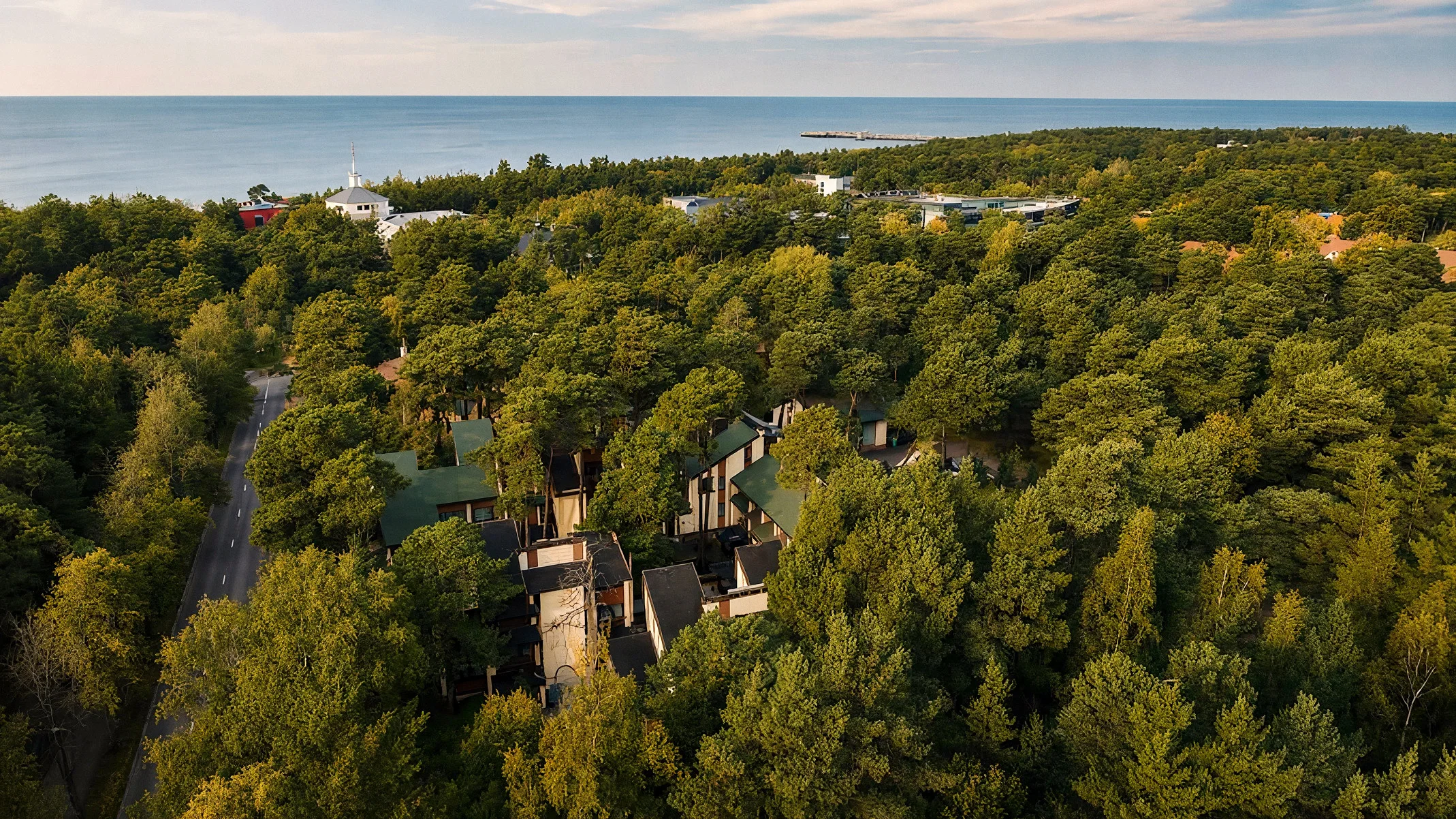
From the Prie Parko hotel (S. Dariaus ir S. Girėno g. 11) to the sea is about five minutes on foot, and Birutė Park is even closer.

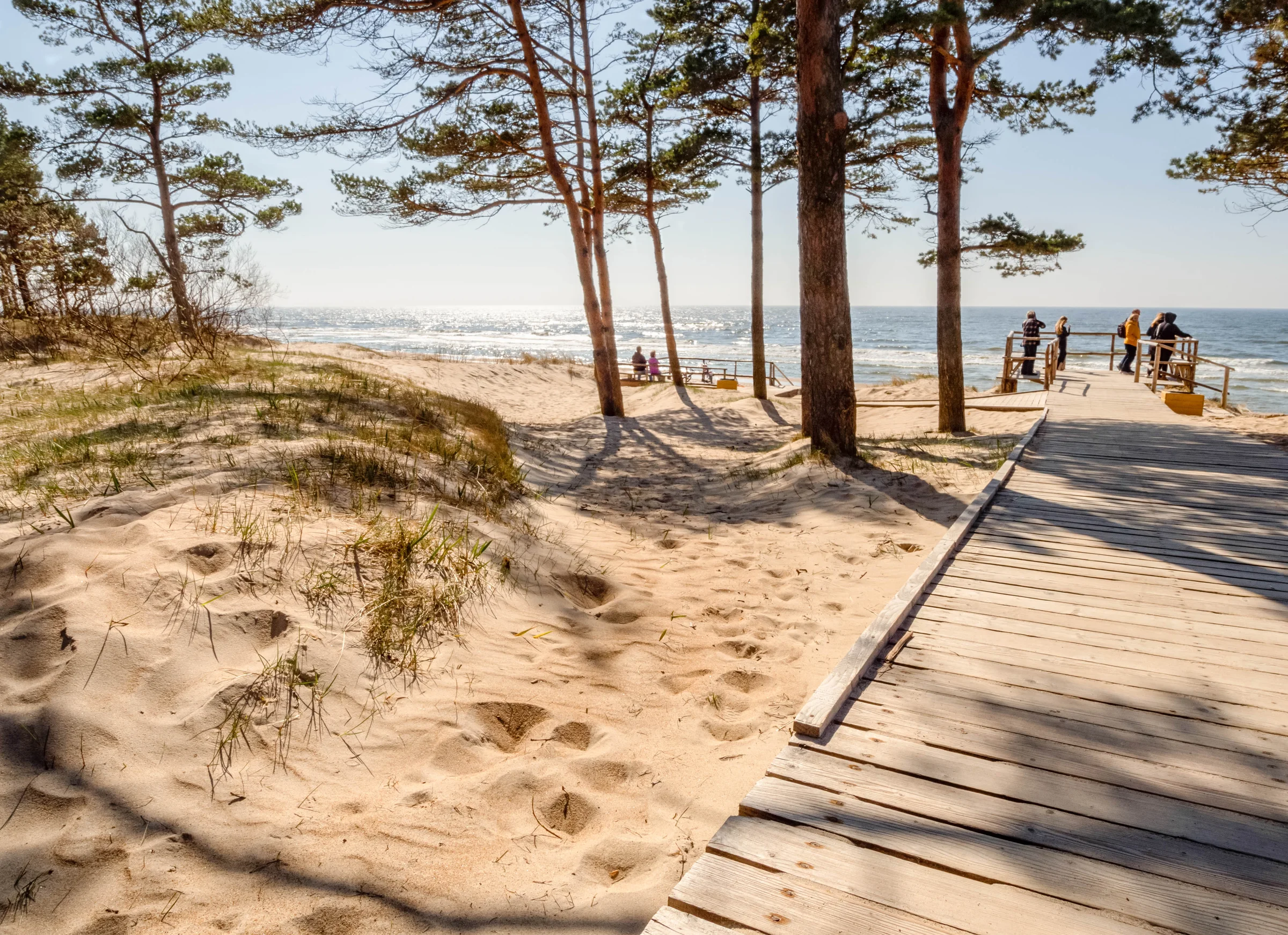
Palanga beach is wide, sandy and stretches a long way in both directions. With small children it is usually calmer north of the pier: the further from the centre, the fewer people and loudspeakers.
Lifeguards are on duty from 15 May to 15 September, and all posts are staffed from 1 June. Before and after the season nobody stops you swimming, there are simply no lifeguards. The Baltic is rarely warm even in July, so a windproof jacket comes in handy even on a sunny day.
The pier is about 470 metres long. Walking to the end and back with children takes roughly half an hour; the wind out there is strong in every season, so hats are more useful than ice cream.
The park of more than a hundred hectares begins just a few hundred metres from the hotel, so you end up in it even without a plan. For children, three things stand out: wide paths that a scooter rolls along nicely, the ponds and Birutė Hill.
Steps lead up the hill, and at the top stands the neo-Gothic Chapel of St George, built in 1869. The climb takes a few minutes and makes a clear “goal” for a walk that would otherwise soon get boring.
In summer the orangery in the park is open, from 1 June to 31 August, daily 10.00–19.00. Beside the paths there is also the Lourdes grotto, built of stone in 1899; for children it is usually the second most interesting spot in the park after the hill.
In Palanga the cycle paths run separately from the road, so riding with children is safe. The Palanga tourist information centre lists a route of about 20 km from the Musical Fountain through Šventoji to Būtingė and one of about 15 km from Palanga to Nemirseta.
With younger children it is more realistic to ride to Šventoji and come back by bus, or simply turn round halfway; the path runs through woodland almost the whole way, so you can stop and change your mind anywhere.
Bicycles can be hired at several places in the resort, and in summer queues form at the more popular ones. If you are planning a longer ride, set off in the morning: in the afternoon there are more people on the path and the wind is stronger.
Hunting for amber is the one activity in Palanga that costs nothing and works almost all the time. Most of it is washed ashore after strong westerly winds, and the best time to look is the first few hours right after a storm, before the waves wash away the freshly deposited band of seaweed.
Locals use long-handled nets and wade into the shallows, but for children it is quite enough to walk along the waterline and sift through the little heaps of seaweed. The pieces are usually small and look nothing like jewellery, so before you start it is worth calling in at the Amber Museum to see what raw amber actually looks like.
Both places have height or age restrictions, and opening hours change over the season. The most reliable way to confirm the details is to check on the day.
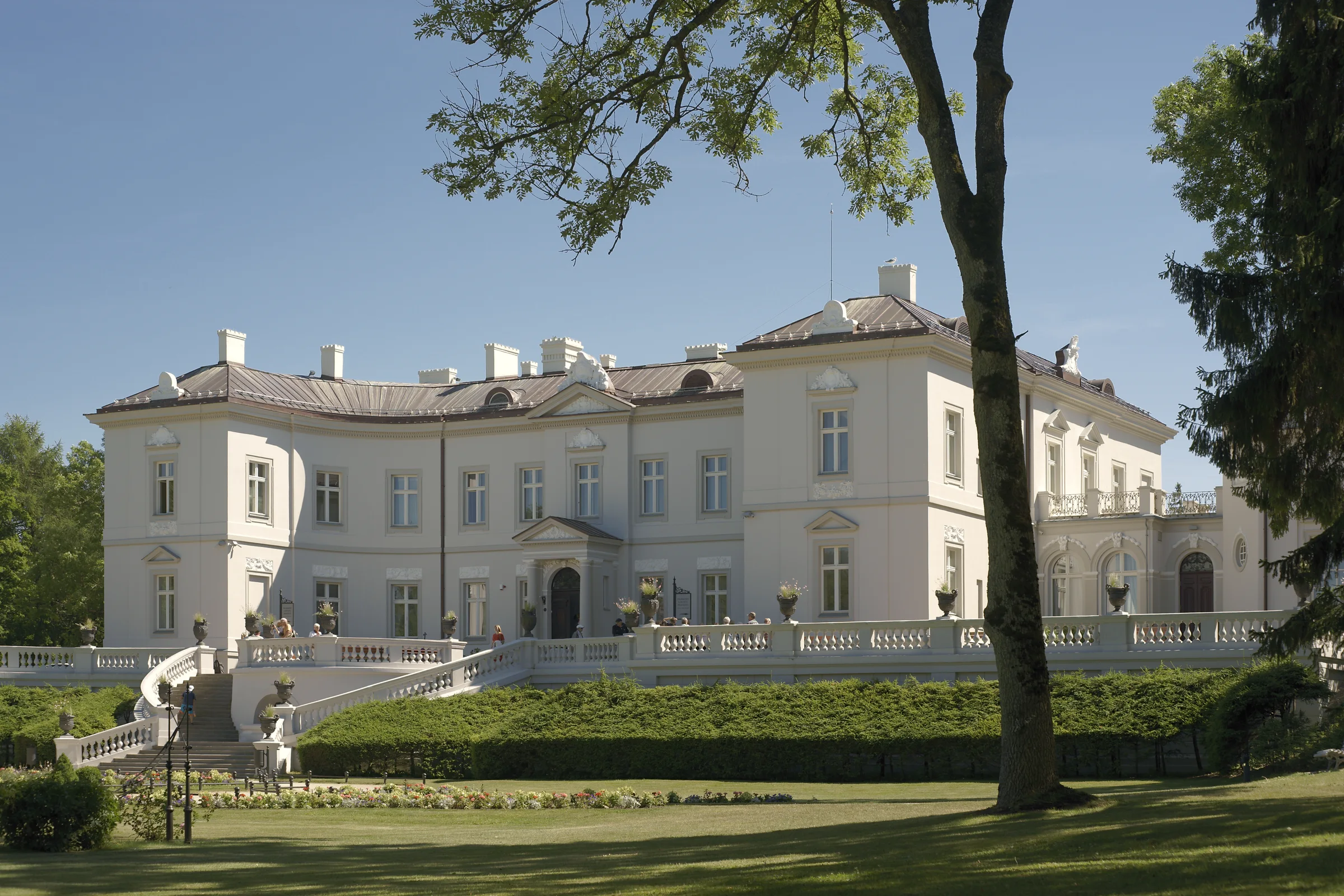
The Palanga Amber Museum (Vytauto g. 17) is housed in the Tiškevičiai Palace in the middle of the park, and its permanent exhibition fills 15 rooms. Children are usually most drawn to the inclusions, pieces of amber with insects trapped inside millions of years ago. The museum is closed on Mondays and public holidays, and last entry is one hour before closing.
Nearby, at S. Daukanto g. 16, is the Antanas Mončys House-Museum, a small sculptor’s museum that takes about an hour.
If the rain sets in, it is worth heading towards Klaipėda. Dino Park at Radailiai Manor (about 7 km from Klaipėda) is open roughly from mid-March to mid-November. The Lithuanian Sea Museum with its dolphinarium is in Smiltynė, reached by ferry from Klaipėda, so allow a full day for the trip.