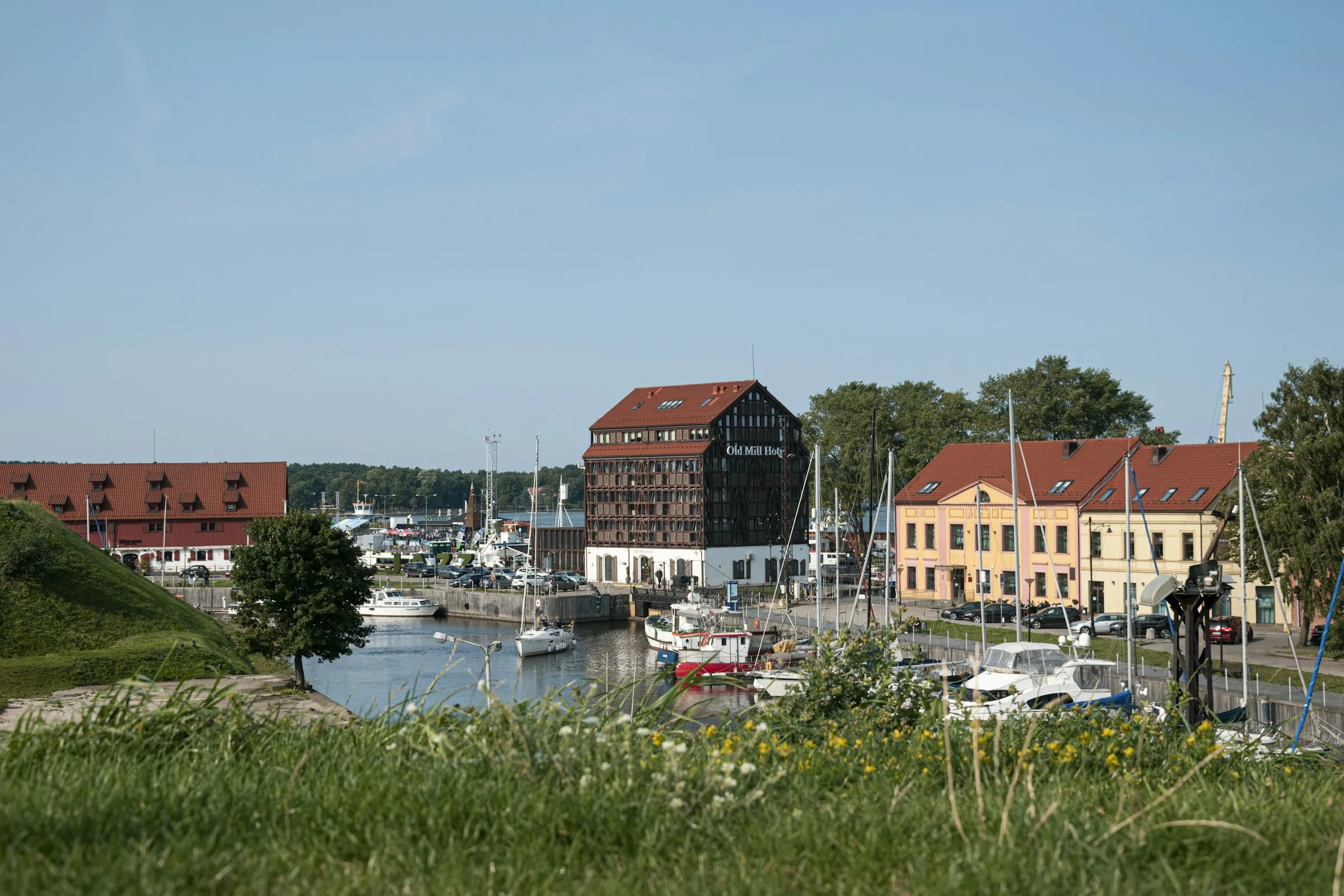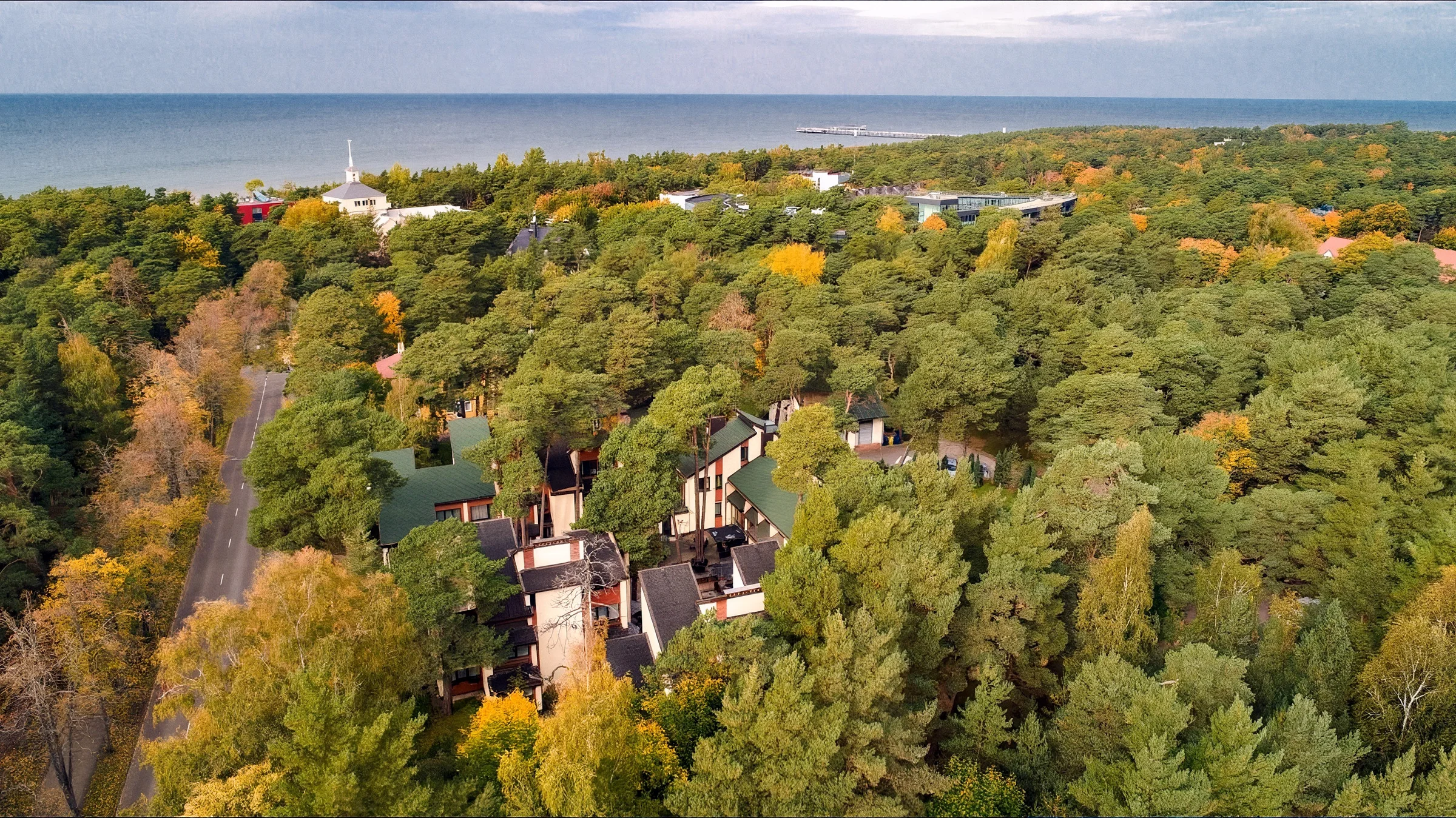
From Palanga to Nida is only about 80 kilometres, but in between lie a ferry, a narrow sand spit covered in pine forest and great white dunes. The Curonian Spit has been on the UNESCO World Heritage List since 2000, and one day is enough to see it well.
Here is everything you need for the trip: what the ferry and the local fee cost, what changed in 2026, a map with the driving route and a walk around Nida, a plan for the day and the rules worth keeping on the dunes.
What it costs
- Car ferry
- €23.20
- Local fee, off-season
- €10
- Local fee, 20 Jun–20 Aug
- €50
- Electric car
- €0 / €25
- Foot passenger ferry
- €1.70
- Bus Smiltynė–Nida
- €8
Why go
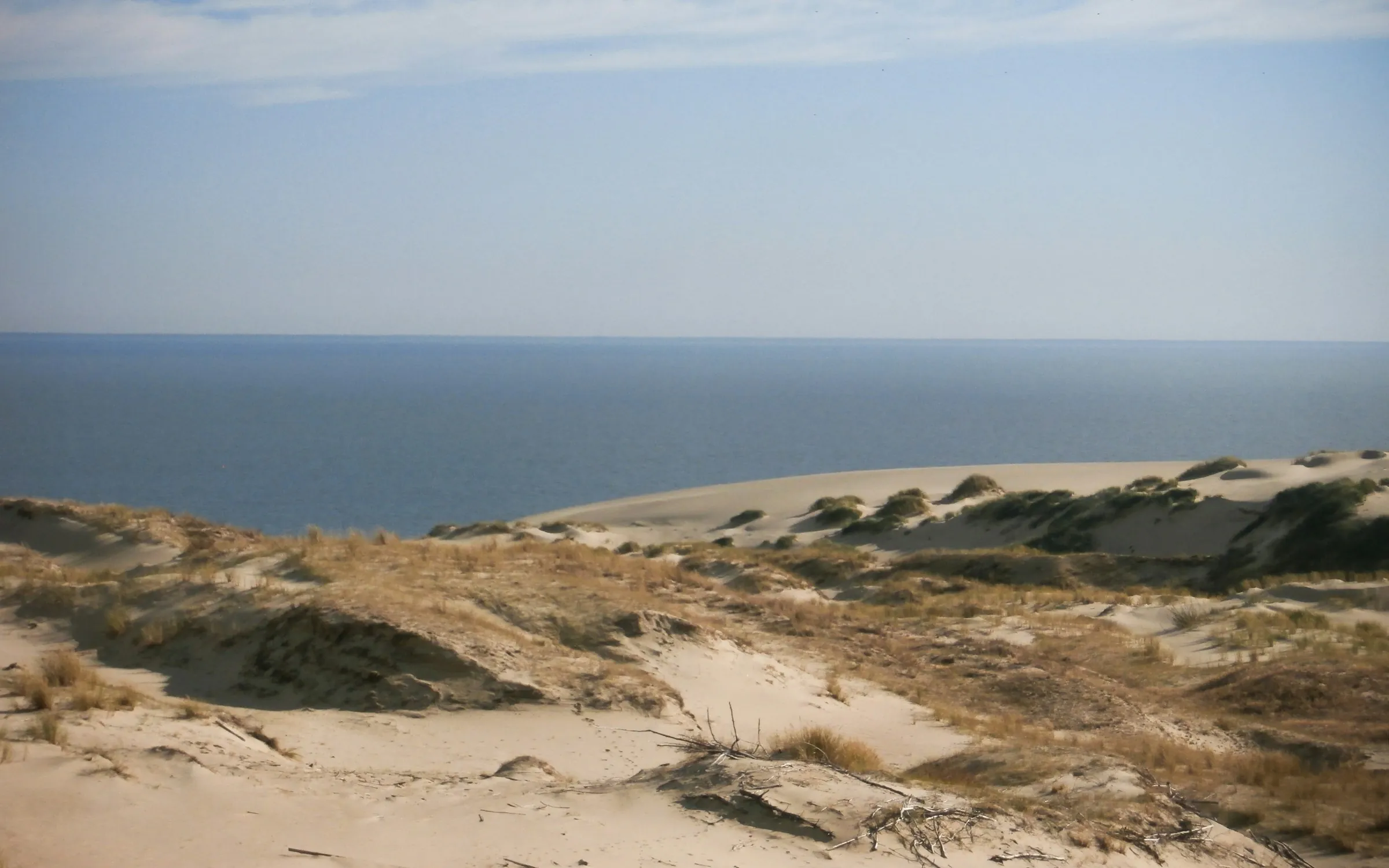
The Curonian Spit is a sand spit about 98 km long between the Baltic Sea and the Curonian Lagoon. Its northern 52 km belong to Lithuania, the southern part to Russia’s Kaliningrad region. At its widest, just north of Nida, it is almost 4 km across, and in many places you can walk from the lagoon to the sea in a few minutes.
It was people who set the dunes moving: from the 16th century forests were felled and cattle grazed, and drifting sand buried more than one village. In the 19th century the dunes were fixed and replanted, and it is this landscape of people struggling with nature that UNESCO protects.
What changed in 2026
- The Old Ferry has moved. The ferry for foot passengers and cyclists now leaves from Šiaurinis ragas, E. Galvanausko bulvaras 1, not from the Danė embankment.
- A pier is under repair. At the New Ferry one pier is being repaired until about December, so only one ferry can berth at a time and waits may be longer.
- A new park website. The national park’s information is now at nerija.lrv.lt; the old address redirects there.
- Agila has reopened. Nida’s tourist information centre reopened after reconstruction in early October.
The route on the map
- New Ferry (car ferry) Nemuno g. 8, Klaipėda. Ferries run round the clock, about every 20 minutes in the daytime. €23.20 per car, and the ticket covers the way back too.keltas.lt
- Old Ferry (foot passengers and bikes) Now at Šiaurinis ragas, E. Galvanausko bulvaras 1. Foot passengers and cyclists only, every hour. €1.70, and the way back is included.keltas.lt
- Alksnynė control post Where Neringa’s local fee for cars is collected. A camera reads your number plate, so if you have paid online in advance the barrier opens by itself.neringa.unipark.shop
- Hill of Witches A forest path in Juodkrantė lined with over 80 oak sculptures: witches, devils and pagan gods, carved in the summers of 1979–1981. A real adventure for children.
- Curonian Spit National Park Visitor Centre L. Rėzos g. 8, Juodkrantė. An interactive exhibition, “Shaped by wind, sand and water”, that children enjoy too.nerija.lrv.lt
- Grey heron and cormorant colony A viewing platform above one of the largest colonies of its kind in Lithuania: in 2021, 3,135 pairs of cormorants and 228 pairs of herons nested here. Liveliest from February to July. The smell is strong.
- Nagliai trail: the Dead Dunes A 1.1 km trail onto the grey dunes, the only way into the Nagliai reserve. €5 in season, card only; from 19 October to 31 March you may walk it on your own in daylight.nerija.lrv.lt
- Parnidis Dune and the sundial A dune about 52 m high with the 13.8 m obelisk of the sundial (rebuilt in 2011). The only place in Lithuania where the sun rises out of water and sets into water.
- Thomas Mann Memorial Museum Tomo Mano g. 8. The writer’s summer house, built in 1930 on Mother-in-Law’s Hill, where he spent three summers.neringosmuziejai.lt
- Nida Fisherman’s Ethnographic Homestead Naglių g. 4. A 1927 fisherman’s homestead by the lagoon, with boats and a replica kurėnas. Off-season it is open Tue–Sat 10–17.
- Lutheran church and the krikštai A neo-Gothic church from 1888 and, next to it, the old cemetery with krikštai, the Curonians’ wooden grave boards carved with birds and horse heads.
- Nida harbour and promenade The marina and the lagoon-side promenade. The easiest place for lunch, and smoked fish is the local classic.
- Mizgiris Amber Museum Naglių g. 27. An “amber forest”, rare amber and 3D films. Open daily 10–19; off-season it is worth phoning ahead.
- Agila tourist information centre Taikos g. 4. Reopened after reconstruction in October 2026. The place to ask what is open that day.
A day by car
- 8.00Set offAbout 32 km and half an hour to the New Ferry in Klaipėda.
- 8.40Ferry to SmiltynėThe €23.20 ticket also covers the way back. In the daytime ferries sail about every 20 minutes.
- 9.15Alksnynė postThe local fee is €10 (€50 at the summer peak). Paying online in advance saves time.
- 9.30Hill of WitchesAbout 45 minutes among the oak sculptures, then the lagoon promenade and the church.
- 10.40Heron and cormorant colonyA short stop at the viewing platform just south of Juodkrantė.
- 11.30The Dead DunesThe Nagliai trail, 1.1 km and about an hour. €5 in season, card only.
- 13.00Lunch in NidaBy the harbour and the promenade. Smoked fish is the classic here.
- 14.00Nida’s museumsThe fisherman’s homestead, the church with the krikštai and Thomas Mann’s house. A three-museum ticket is €5.
- 15.45Parnidis DuneUp the stairs to the sundial. In autumn you can wait for the sunset here.
- 17.15Head backAbout 50 minutes to Smiltynė; no new ferry ticket is needed. Back at the hotel around 19.00.
Without a car
You can reach the spit by public transport too, but it makes a long day, with about five hours of travelling.
- Buses from Palanga to Klaipėda run about every 30 minutes.
- From Klaipėda bus station it is about a 25-minute walk to the Old Ferry at Šiaurinis ragas.
- The ferry costs €1.70 for a foot passenger, the return included.
- From Smiltynė the bus takes about an hour to Nida and costs €8, or €3 to Juodkrantė; a bike is €10. The buses are timed to the ferries and wait if a ferry is late.
The bus timetable changes every month, so check it on visitneringa.com before you set off, and make sure you know when the last bus leaves Nida.
Juodkrantė
The Hill of Witches is a 42 m hill where Midsummer has been celebrated since time out of mind. In the summers of 1979–1981 folk artists carved more than 80 oak sculptures here, and the path among them is one of the most fun walks with children anywhere on the coast.
On the northern edge of Juodkrantė is Amber Bay. In the 19th century dredgers dug up about 75 tonnes of amber here, and the Neolithic and Bronze Age amber pieces found with it are known as the Juodkrantė Treasure. A little south of the village, on Heron Hill, grey herons and great cormorants nest. The colony is liveliest from February or March into the summer, and you will smell it before you see the birds.
The Dead Dunes
Between Juodkrantė and Pervalka lies the Nagliai Strict Nature Reserve with its grey dunes. They are called “dead” because, fixed in the 19th century, they no longer move. The only way into the reserve is the 1.1 km educational trail from the car park at kilometre 31 of the road.
In 2026 the regulated visiting season ran until 18 October: €5 for adults and €2 for students and pensioners, bank card only. From 19 October to 31 March you may walk the trail on your own, in daylight and without leaving the path.
Nida
Nida sits at the southern end of the Lithuanian part of the spit. Parnidis Dune rises about 52 m, and it keeps getting lower: between 1984 and 2004 it lost about 15 metres, partly to people climbing its slopes. On top stands the sundial-calendar, wrecked by Hurricane Anatoly in 1999 and rebuilt in 2011. From the top you see the lagoon, the sea and, to the south, dunes that are already in Russia.
In Nida itself, look in at the 1927 fisherman’s homestead, the neo-Gothic church of 1888 and the old cemetery with its krikštai. Thomas Mann’s house on Mother-in-Law’s Hill was built in 1930, and the writer spent three summers there. A ticket for three of Neringa’s museums costs €5 (€3 for pupils). Off-season they open Tuesday to Saturday, so they are closed on Sundays and Mondays.
On the dunes and in the reserves
- Keep to paths and boardwalks. A footprint becomes a hollow, and a hollow becomes a gully. Climbing the slopes of Parnidis Dune is prohibited, and the east side of the dune is off-limits altogether.
- Do not cross reserve boundaries. The Nagliai and Grobštas reserves may be entered only on the marked trail, the cycle path or the beach between the water and the foot of the dune. Walking along the lagoon shore from Juodkrantė to Pervalka is forbidden.
- Park only in car parks or on the road shoulder, never on sand or the forest floor. Breaking the park’s rules can cost a €30–150 fine.
- Do not feed the foxes, however tame they look. Ticks are active from March to November.
- Fires only in places built for them, and tents only at the Nida campsite.
- The border. A little south of Parnidis Dune runs the border with Russia’s Kaliningrad region. Keep well away from it.
When to go
From 20 June to 20 August is the most expensive and the busiest time: a €50 fee, paid parking in Nida from June to August and queues for the ferry. If you go in summer, leave early, before 9.00, or take the bus.
In autumn, winter and spring the fee is only €10, parking is free and the dunes are nearly empty. Just remember that the museums then open Tuesday to Saturday and the lighthouse is closed. The heron and cormorant colony is liveliest from February or March into the summer.
Worth knowing
Sources
Where this information comes from
- Curonian Spit National Park: frequently asked questions
- The Curonian Spit’s UNESCO status
- The Nagliai reserve educational trail
- Visiting rules
- Visitor centres
- Smiltynės perkėla: timetable
- Smiltynės perkėla: fares
- Winter ferry timetable, 2026–2027
- Pier repairs until December, 2026
- Neringa municipality: the local fee
- UNIPARK: entering Neringa
- Visit Neringa: buses
- Visit Neringa: by car
- Visit Neringa: parking in Nida
- Visit Neringa: the Hill of Witches
- Visit Neringa: the heron and cormorant colony
- Visit Neringa: Parnidis Dune
- Visit Neringa: the sundial
- Visit Neringa: Mizgiris Amber Museum
- Visit Neringa: Agila reopened
- Neringa museums: opening hours
- Neringa museums: ticket prices
- Wikipedia: Parnidis Dune (Lithuanian)
- Wikipedia: Curonian Spit
- LRT: fines on the coast, 2026
- Map and routes: OpenStreetMap, OpenFreeMap
- Top photo: Rolandas S, Unsplash
- Photo: Alexander Gluschenko, Unsplash
Distances and times are calculated from OpenStreetMap data and do not include waiting for the ferry. Prices, timetables and opening hours were checked on 21 October 2026; bus and ferry timetables change, so check before you travel.