Amber drifts in the sea almost invisibly until a big storm stirs up the seabed and throws it ashore along with seaweed and twigs. That is when people with nets and rubber boots appear on the beach. Amber catching on the Lithuanian coast is on the national inventory of intangible cultural heritage, and anyone can give it a try.
Below you will find a live indicator that reads the past few days’ wind and tells you whether the beach is worth a walk, a map of the places amber catchers themselves name, and simple ways to tell amber from glass or plastic. And one important safety rule: never put a find in your pocket.
Worth going today?
The sea throws up most amber after strong storms from the sea, as the wind begins to drop. With JavaScript turned on, this shows how strong the wind has been over the past 36 hours and whether a storm is on the way. Data: Lithuanian Hydrometeorological Service.
- Age
- About 35–50 million years
- From
- The Sambia Peninsula’s “blue earth”
- When
- Autumn, winter, early spring
- Time of day
- Early morning after a storm
Where amber comes from
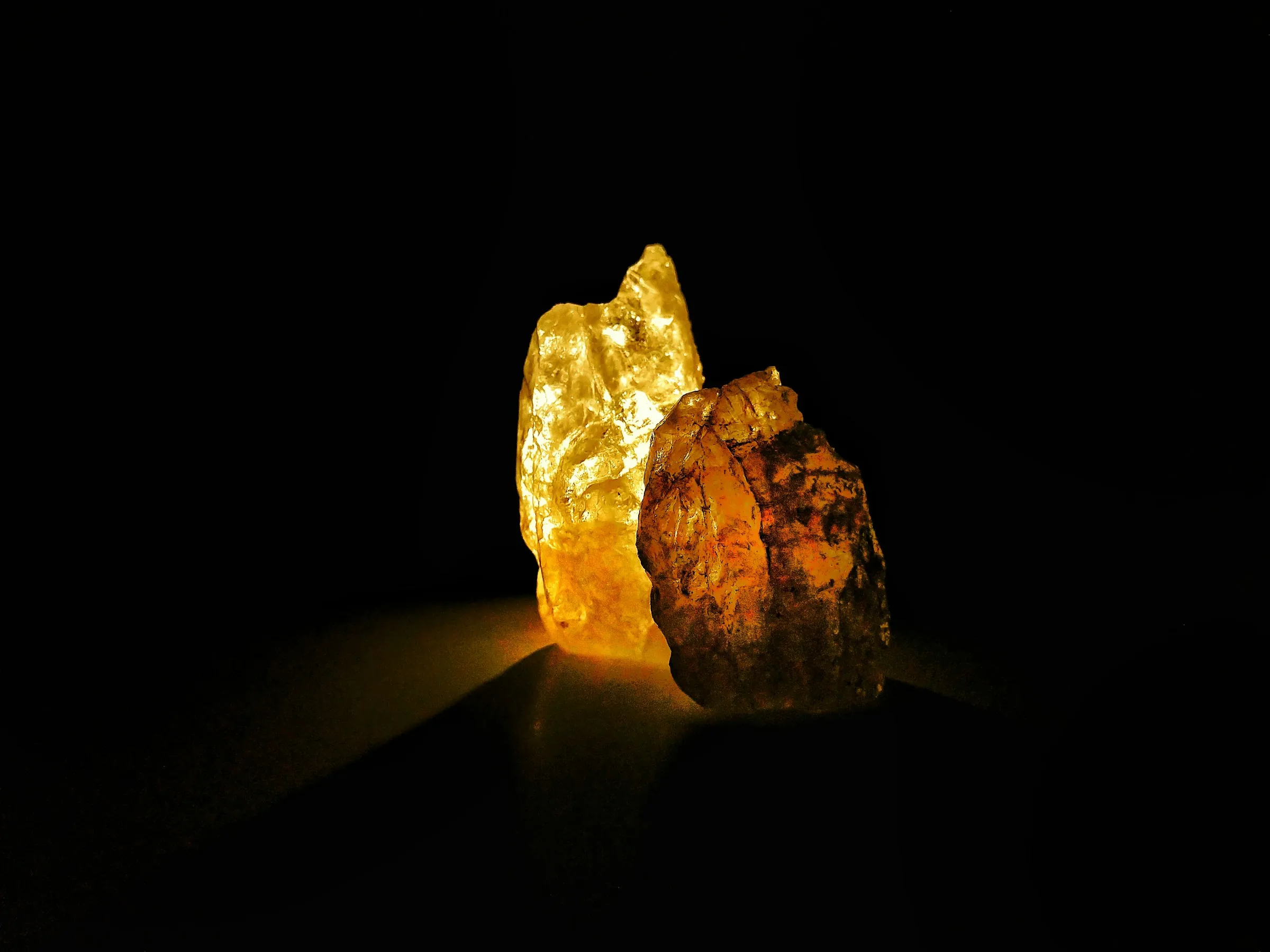
Baltic amber is not a stone but fossilised conifer resin. It formed in the Eocene, roughly 35–50 million years ago, in warm forests where Scandinavia and the Baltic Sea are today. A large river carried the resin into a delta near the Sambia Peninsula, in what is now the Kaliningrad region, where it was preserved in a greenish-grey layer that the old miners called “blue earth”. About 90% of the world’s amber reserves lie in that peninsula.
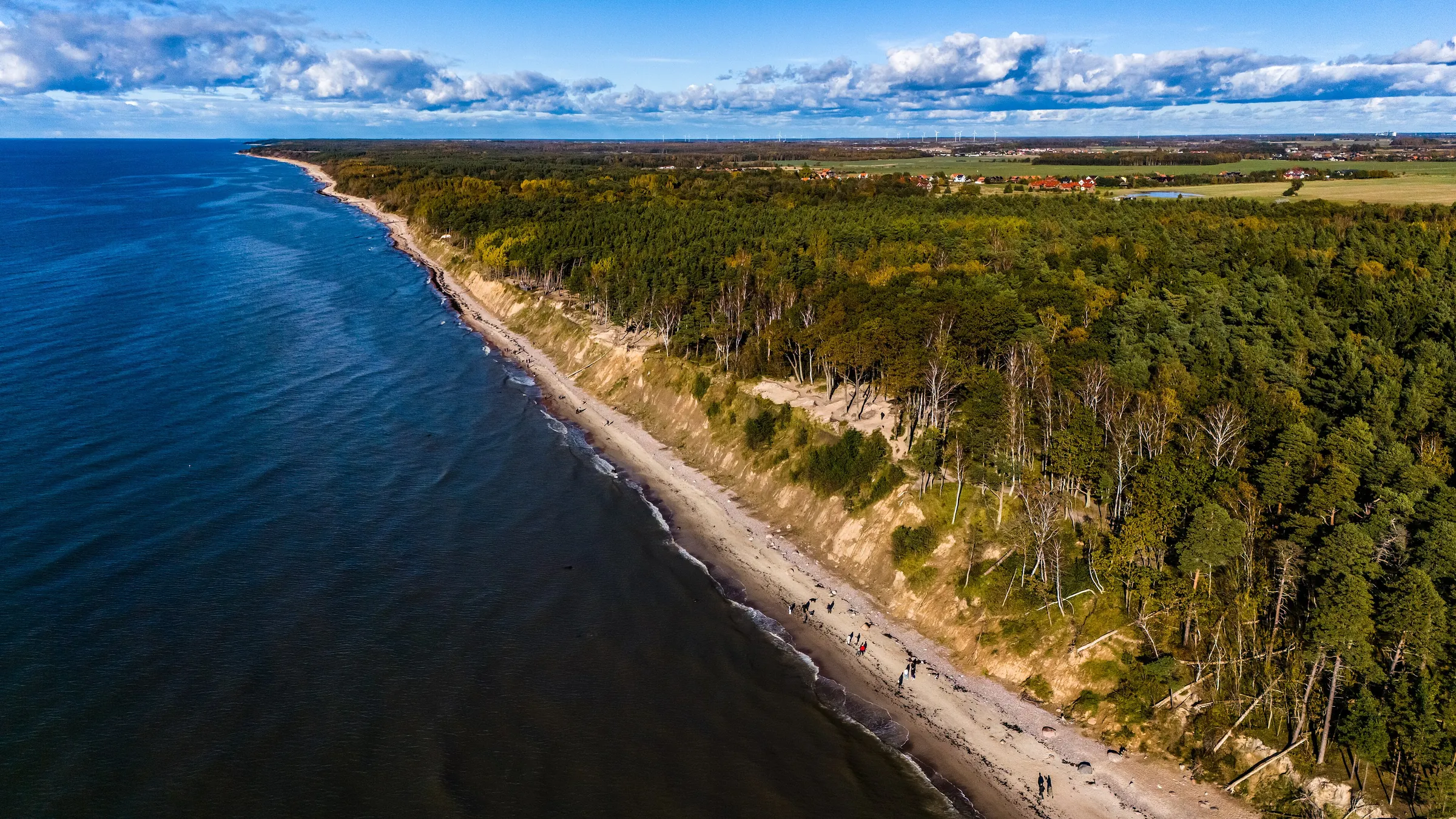
After the Ice Age the waves began to erode the Sambia shores, and longshore currents carried amber north towards Juodkrantė, Šventoji and Liepāja. Big storms still stir up the amber-bearing layers of the seabed today, and about 600 kg of amber a year is gathered on the Lithuanian coast.
When and how to look
- Go after the storm, not during it. Amber catchers agree: the bigger and longer the storm, the better, and the best moment is when the sea first begins to calm, with waves still rolling in one after another.
- Early in the morning, before others have walked the tideline. Washed-up amber does not stay long: once the wind and current shift, it can be gone again within hours.
- Follow the seaweed. Look for dark rafts of seaweed and twigs in the surf, especially with gulls circling over them. When a raft drifts towards the shore, the catching begins.
- Sift fresh piles at the waterline. Professionals catch about 90% of their amber in the waves with a net, not on dry sand.
- Don’t expect big pieces. A typical find is the size of a pea or a thumbnail, and clear pieces are hard to spot among the debris.
The indicator above counts only wind from the sea, from south-south-west round to north-north-west. The coast here faces west, so that is the wind that drives the waves onto the beach. It is a rule of thumb based on amber catchers’ experience and weather data, not a scientific forecast.
Where to look
- Palanga Amber Museum Tiškevičiai Palace in the Botanical Park: about 28,000 pieces of amber, thousands of them with inclusions, and the 3.5 kg Sun Stone. A ticket costs €6 from 16 September to 14 May, €8 in summer.Tickets
- Palanga beach The nearest beach. After westerly storms, check the lines of seaweed at the water’s edge.
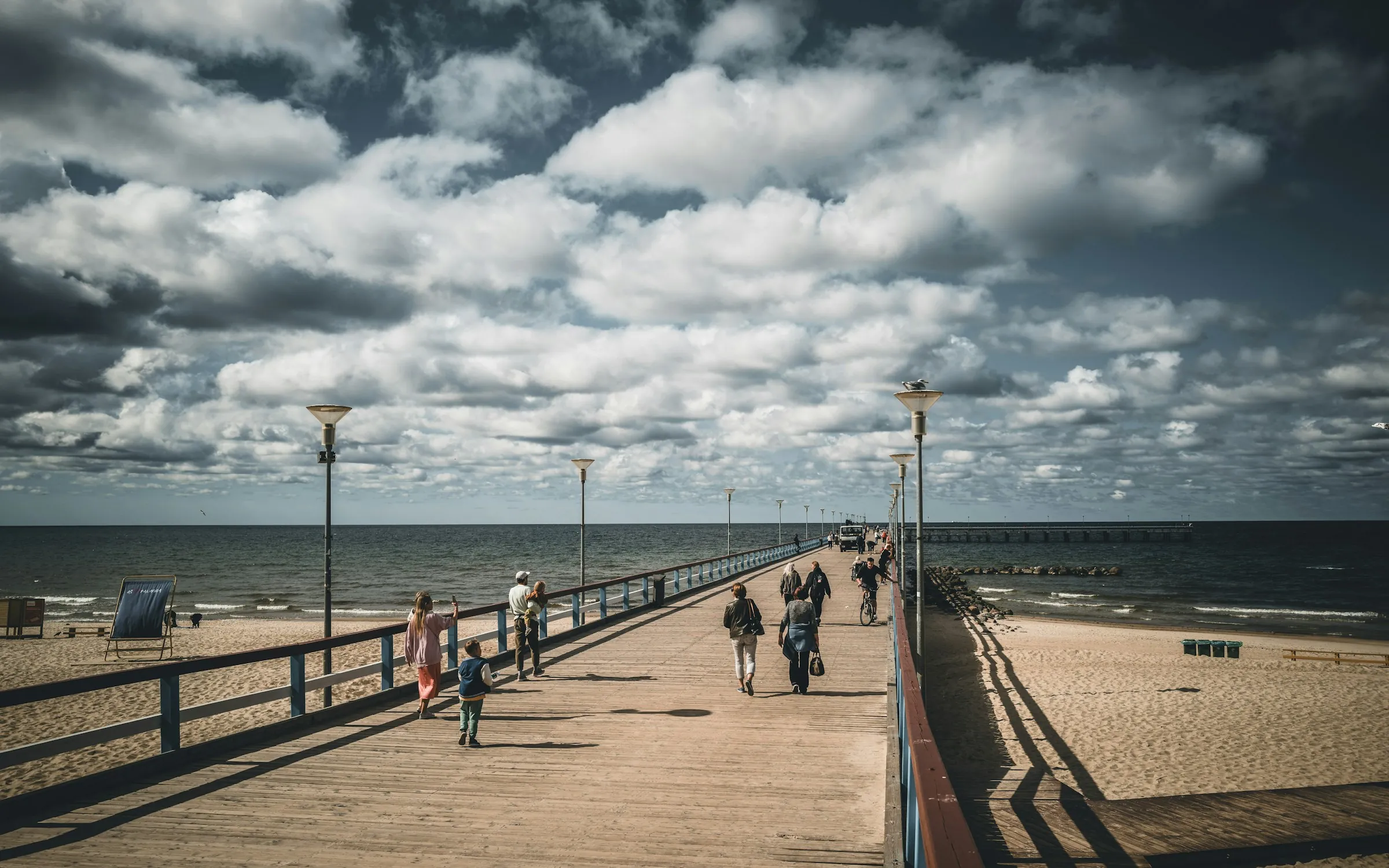
- Palanga Pier From the pier you can see the surf well: it is easier to spot dark rafts of seaweed and the gulls above them.
- Nemirseta beach Palanga’s quiet southern beach, in the Seaside Regional Park and the closest to Karklė.
- Karklė, Olando kepurė The stretch of coast amber catchers mention most: “amber can turn up anywhere, but most often at Karklė.” Keep away from the cliff edge, it is collapsing.
- Seaside Regional Park visitor centre Placio g. 54, Karklė. Ask here about amber-catching excursions with a local guide.mlietuva.lrv.lt
- Šventoji river mouth Most seaweed and amber collect between the piers, but this is also where people were burned by white phosphorus in 2015. Gloves only. New piers are being built at the river mouth until 2028.
- Melnragė A Klaipėda beach by the harbour mole, where local amber catchers work after storms.
Safety: white phosphorus
The Baltic seabed still holds the remains of Second World War incendiary munitions. The white phosphorus in them washes ashore and looks just like amber. Once dry it ignites at around 40–50 °C, so the warmth of a pocket is enough, and it burns at up to 1000 °C. In the summer of 2015, within a week and a half, five holidaymakers at Šventoji, a seven-year-old girl among them, burned their hands when an “amber” suddenly grew hot. Lifeguards say such cases increase after storms, and most happen between the Šventoji piers.
- Wear gloves and never put anything in your mouth.
- Never put finds in your pocket. Carry them in a metal tin or another non-flammable container.
- Let finds dry thoroughly outdoors before you take them inside.
- If a “stone” starts to smoke or burn, cover it with sand or drop it into water. If skin is burned, plunge it into water at once (seawater will do), keep cooling it and call 112.
The first three are the advice of Lithuania’s Ministry of Environment. And stay out of the water while a storm is blowing: even experienced amber catchers do not take guests into big, cold waves.
Real amber or not?
Is it allowed?
Yes. Anyone may collect what the sea washes up: the tradition has been free and open to all since the 19th century, and the Seaside Regional Park itself runs amber-catching excursions. Digging for amber in the dunes or the seabed is not allowed. Under Lithuania’s Subsoil Law amber counts as a mineral resource, and extracting it needs a permit.
Karklė and Nemirseta are in the Seaside Regional Park, and the Curonian Spit has its own protected areas. Keep to marked paths there and do not trample the dunes.
The sea now
The sea temperature at Palanga Pier is measured every hour by the Lithuanian Hydrometeorological Service: meteo.lt.
When the sea is calm
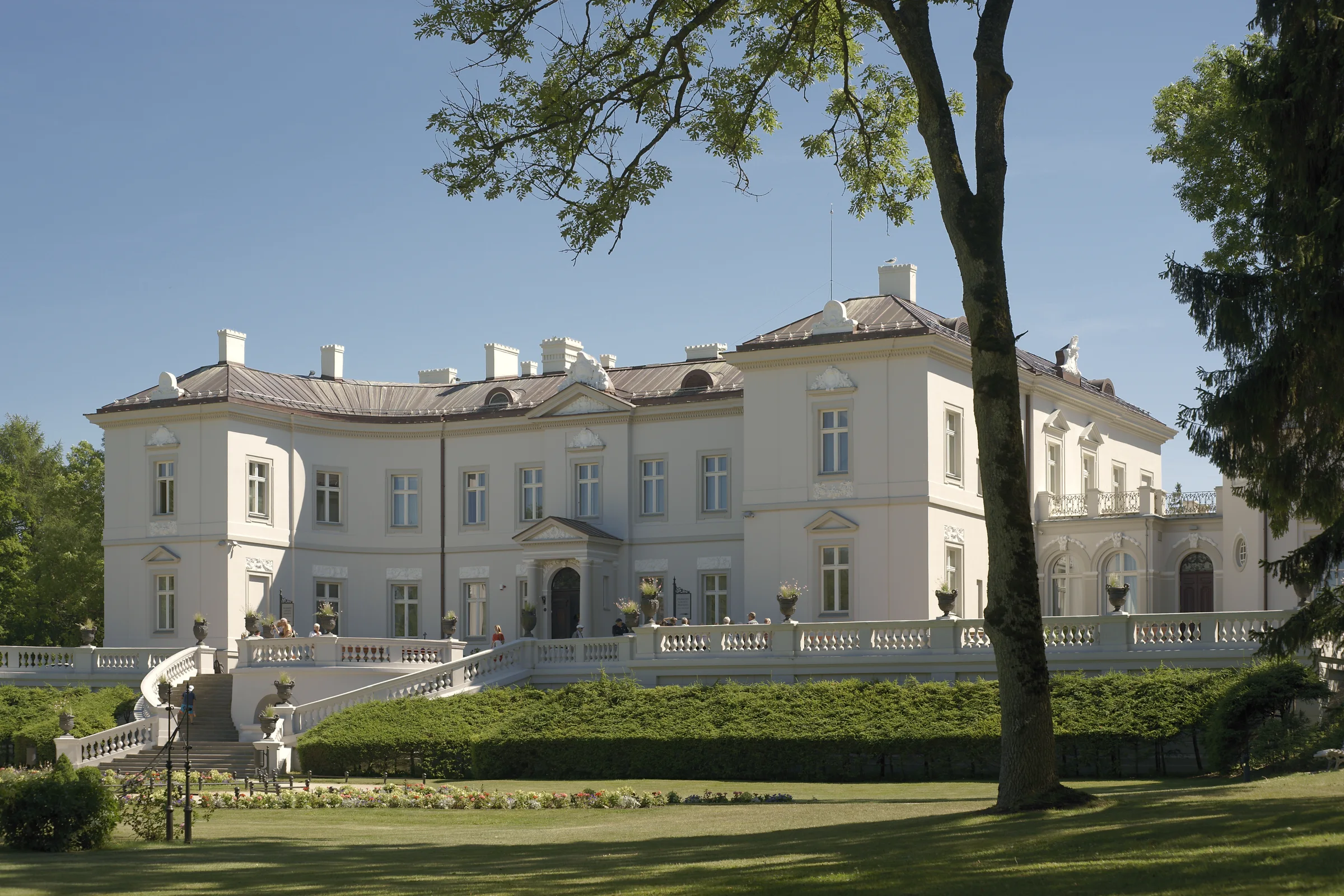
With no storm about, the best place to see amber is the Palanga Amber Museum in Tiškevičiai Palace, in the Botanical Park, about 900 metres from the hotel through Birutė Park. Fifteen halls show around 4,500 pieces of amber, from insects caught in resin millions of years ago to the Sun Stone, which weighs about 3.5 kg.
From 16 September to 14 May the museum is open Tuesday to Saturday 10.00–18.00 and Sunday 10.00–17.00, and an hour or two longer in summer. It is closed on Mondays and public holidays, and the ticket office closes an hour before the museum. A ticket costs €6 off-season (concession €3), €8 and €4 in summer, and you can buy tickets online. For a walk through the park on the way, see our guide to Birutė Park and the Amber Museum.
For a real “catch”, the Seaside Regional Park recommends amber-catching excursions with a local guide in Karklė. Ask the park’s visitor centre about prices and times.
Worth knowing
Sources
Where this information comes from
- Seaside Regional Park: amber catching on the Lithuanian coast
- Inventory of intangible cultural heritage: amber catching
- Lithuanian Geological Survey, A. Damušytė: “Lithuania’s gold?”
- Universal Lithuanian Encyclopedia: amber
- Palanga Amber Museum: opening hours and prices
- Palanga Amber Museum tickets
- 15min: Ministry of Environment advice on white phosphorus, 2022
- 15min: white phosphorus at Šventoji, 2015
- 15min: an amber guide in Karklė, 2021
- 15min: the secrets of amber catching in Karklė, 2020
- 15min: an amber catcher on winter and UV light, 2022
- LRT: amber and the Subsoil Law, 2016
- Vilnius University: storms on the Lithuanian coast, 2020
- LHMT: strong-wind warning criteria
- LibreTexts Gemology: identifying amber
- Lithuanian Hydrometeorological Service, open data
- Map: OpenStreetMap, OpenFreeMap
- Photo: an amber hunter (Unsplash)
- Photo: pieces of amber (Unsplash)
Wind data: Lithuanian Hydrometeorological Service (LHMT), api.meteo.lt, CC BY-SA 4.0. Measured wind comes from the Klaipėda station, about 20 km to the south. The amber indicator is a rule of thumb, not a forecast. Information checked on 21 October 2026.