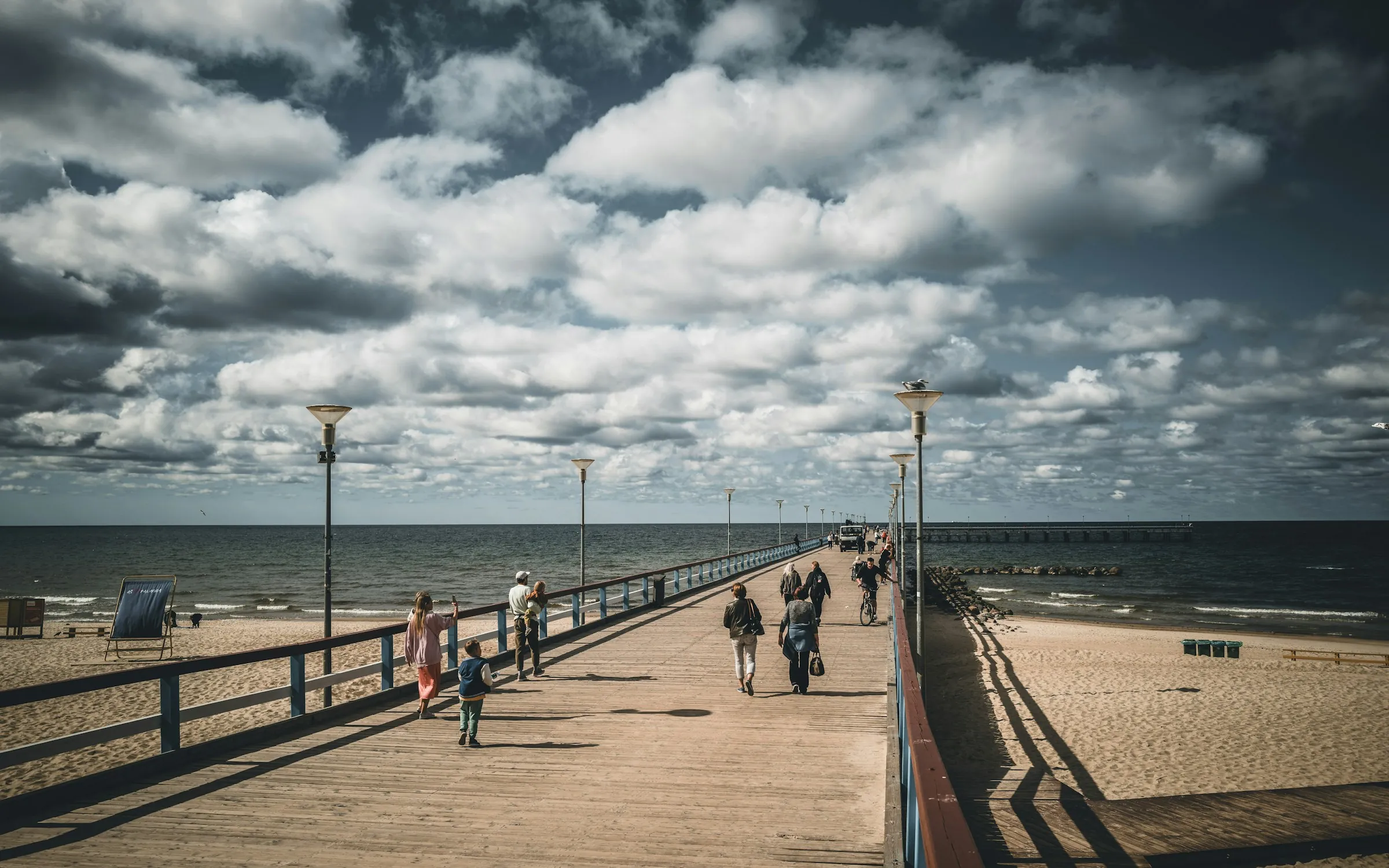
A hundred years ago Palanga was the resort of the Counts Tiškevičius: they built villas to let to summer guests, bathhouses, a Kurhaus and a church. Many of those buildings still stand in the shade of the pines a few hundred metres from the hotel, and most passers-by have no idea what they are walking past.
This route is a loop past 12 villas and resort buildings, from 1939 modernism back to a pharmacy of 1827. Each stop has its story: the President’s summer residence, wind organs in a tower, the mistress’s room, and a villa nicknamed “the chest of drawers” that thoroughly deserves it.
- Stops
- 12
- Distance
- 4.7 km
- Oldest
- 1827
- Newest
- 1939
Why Palanga looks the way it does
At the end of the 19th century the Counts Tiškevičius turned Palanga into a resort. They built wooden villas to let to summer guests and invited relatives and friends to stay. Many are in the so-called Swiss style: galleries, turrets, bay windows and fretwork ornament. Between the wars came the modernist villas of bankers and officials.
Most of the villas are now private homes, hotels or offices, so admire them from the street and stay out of the gardens. You can go inside only Villa Anapilis, now home to the Palanga Resort Museum, the church, and the Kurhaus during events.
The route on the map
- Villa Pelėda (“The Owl”) We start with modernism: a 1939 villa built by the banker Buršteinas, with a symmetrical facade, massive first-floor balconies and terraces glazed with ribbon windows beneath them. Its ten rooms are linked by a system of corridors that survives to this day.
- The Warm Baths This is why people came to Palanga in the first place: to take the cure. Count Feliksas Tiškevičius built a bathhouse here in the “Swiss” style, with baths of heated seawater, mineral water and herbs. Wings were added in 1910–1912, bringing it to 24 baths in three classes.
- Villa Mahorta Look for the two-storey octagonal turret, the villa’s most striking feature. Until the First World War it belonged to Countess Sofija Tiškevičienė, and between the wars it held a popular restaurant with an orchestra, evening concerts and dancing.
- The White Villa One of the resort’s few brick villas. In the 1930s President Antanas Smetona spent four weeks here with his family every season, so it became known as the President’s summer residence.
- The Romeo and Juliet villas The resort’s romantic twins. They were once wrapped in balconies that in season became a place for flirting, meeting people and socialising. The balconies and terraces were removed in Soviet times, but the villas still look remarkably authentic.
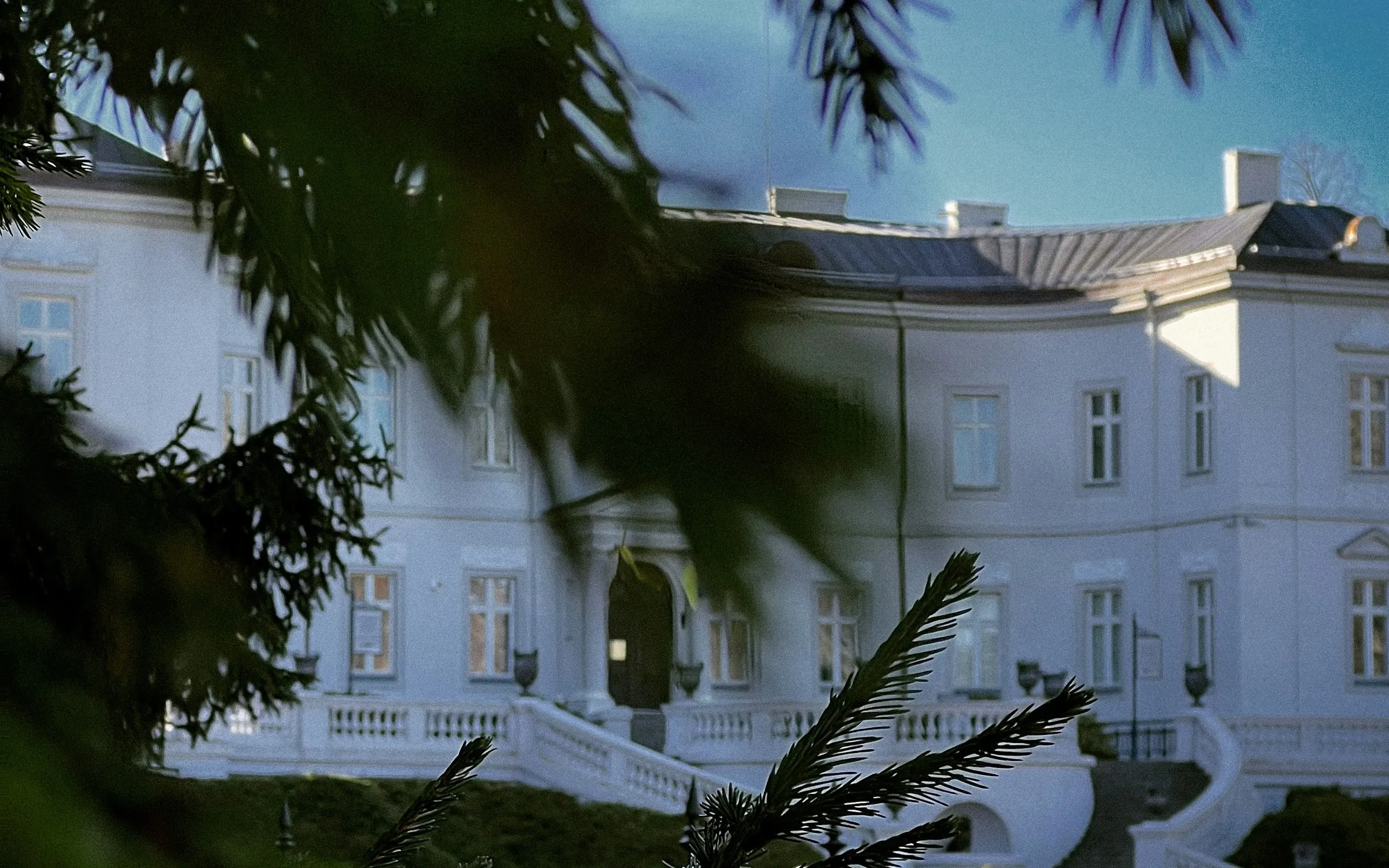
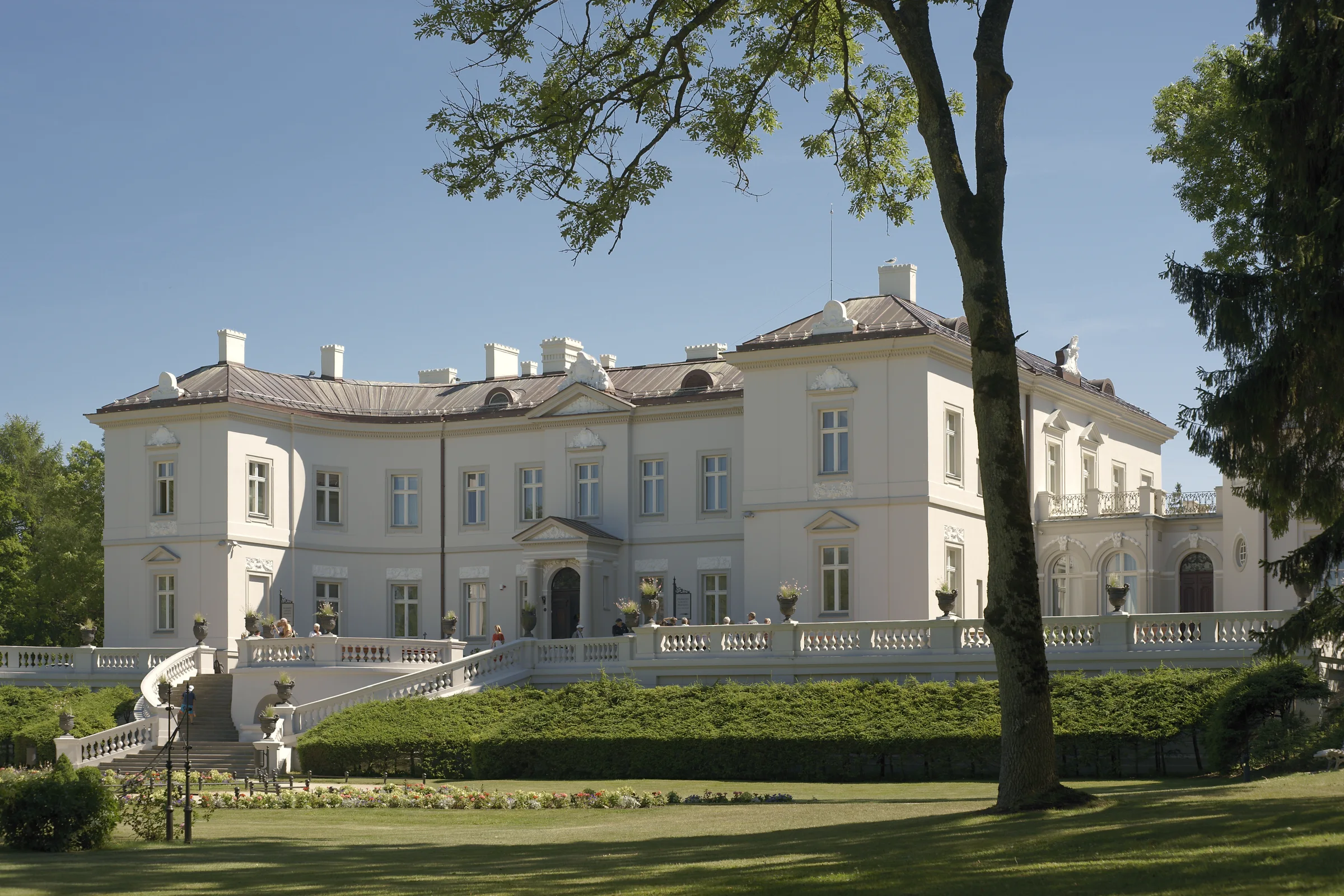
- Villa Anapilis, Palanga Resort Museum The one villa you can go inside. A silhouette of turrets and bay windows, galleries all round, and a tower topped with a ring balcony like a lighthouse. During the 2015 restoration eight tin wind organs were found in the tower: they caught the sea wind and made strange sounds. Locals called the villa “ana pilis”, “that castle”, and the name stuck.kurortomuziejus.lt
- Villa Jūrapilis, or “Komoda” A short detour west. Count Feliksas Tiškevičius built this Italian Neo-Renaissance brick villa for his brother Aleksandras around 1895; the design is attributed to the architect Leonardo Marconi. It got the nickname “Komoda”, the chest of drawers, for its shape. Today it is a guesthouse.
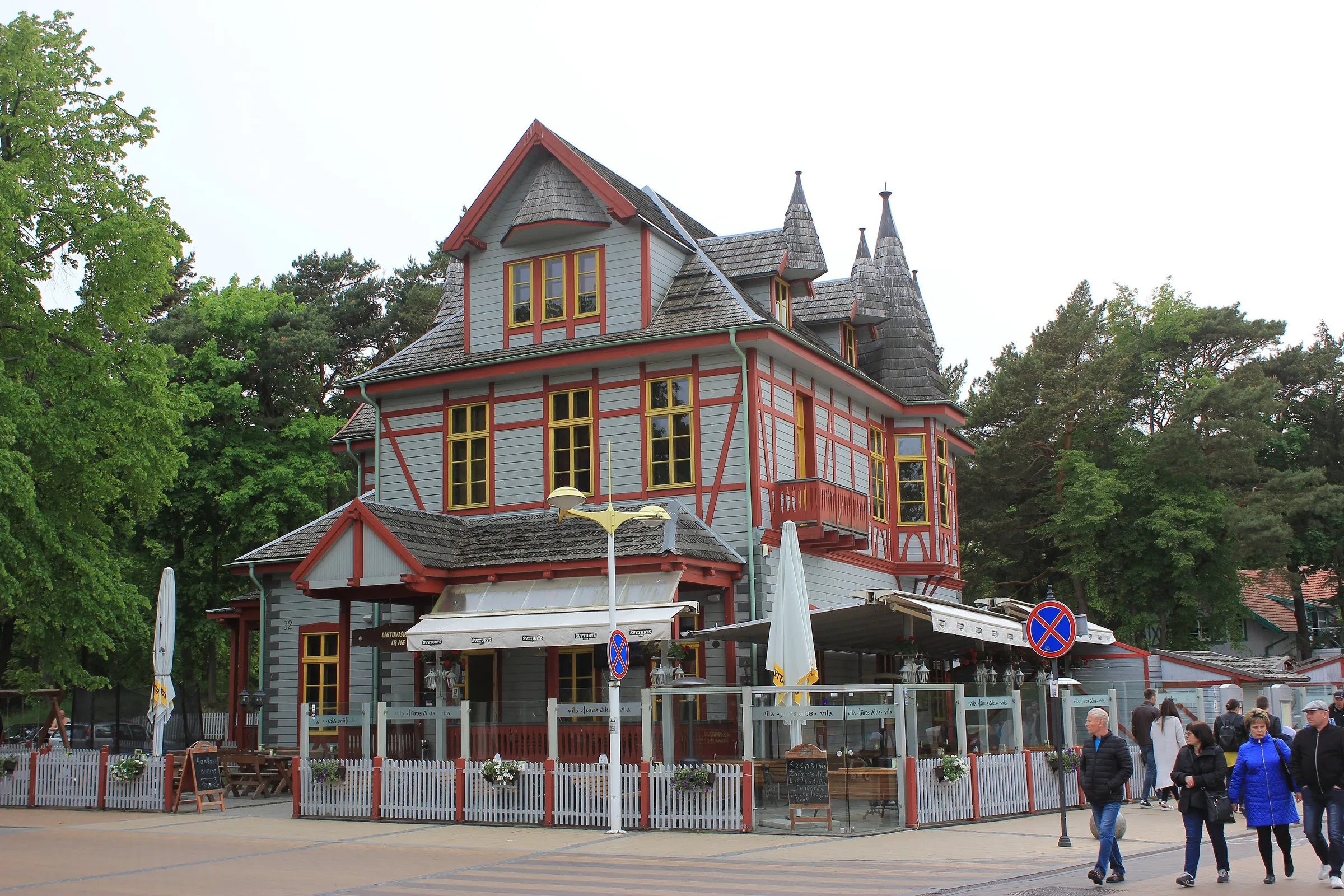
- Villa Jūros akis (“Eye of the Sea”) An asymmetrical Swiss-style villa in which every facade is different. Upstairs are three apartments named “Jūros akis”, “Grafas” (the Count) and “Meilužė” (the Mistress). Legend says the count’s mistress lived in the last one.
- The half-timbered villas Swiss details mixed with Prussian half-timbering. It is one of the oldest groups of buildings in Palanga and recalls the days when the counts’ aristocratic friends and relatives came at their invitation. The street was then a sandy track called Tiškevičius Alley.
- Church of the Assumption A Neo-Gothic red-brick church built in 1897–1907 to a design by the architect Karl Eduard Strandmann. The pulpit and three altars are of French marble. The tower’s viewing deck is at 21.4 m, up the stairs past the clock mechanism: free, but closed during Mass and weddings.
- The Kurhaus and Counts Tiškevičiai Alley The heart of the resort: restaurant, reading room, billiards, dances and concerts, and the office where the resort fee was collected. It burned down in 2002; the brick part was rebuilt by 2013 and the wooden part in 2020, from old photographs. Then walk south down the alley: statues of the count and countess, and the family motto set into the paving, “Choose whom you love”.palangoskultura.lt
- The Old Pharmacy One of the oldest pharmacies in Lithuania, founded in 1827 by Wilhelm Johann Grüning, a German from Riga. He patented “Trejos devynerios”, a bitter of 27 herbs, and during the ban on the Lithuanian press father and son printed their prescriptions in Lithuanian. In 1944–1951 the building was the NKVD headquarters, as a plaque records. It is still a working pharmacy.
The walk, hour by hour
- 0:00The hotelOut onto Birutės alėja: the first villa is just 200 metres away.
- 0:05Villa PelėdaModernism, 1939. From here we head north and back in time.
- 0:15The Warm BathsThe building where the health resort began.
- 0:25Villas of Birutės alėjaMahorta, the White Villa, Romeo and Juliet: four villas in 200 metres.
- 0:45Villa AnapilisIf the museum is open, allow 30–45 minutes.
- 0:55Komoda and J. Basanavičius StreetJūros akis and the half-timbered villas. The best place for a coffee.
- 1:25The church and the KurhausClimb the tower, then walk south down Counts Tiškevičiai Alley.
- 1:45The Old PharmacyThe last stop, 650 metres from the hotel.
- 1:55Back at the hotelOr later, if you stop at the museum or a café.
What to look for
Villa Anapilis: the museum
The Palanga Resort Museum fills four rooms of Villa Anapilis: the Counts Tiškevičius, the resort’s architecture and what a holiday in Palanga used to be like. There is a mirror room and the sound of the wind organs, and the exhibition texts are in English too.
- October–April: Tuesday–Saturday 10.00–19.00.
- May–September: Wednesday–Sunday 10.00–19.00.
- Last entry 30 minutes before closing. Closed on public holidays.
- Tickets €5 (concession €2.50), family tickets €9 or €14, free for pre-school children.
Groups can book a guide on +370 460 30576. Off-season, plan the walk for Tuesday to Saturday so that the museum is open.
Legend and fact
The story goes that the sickly Countess Sofija Tiškevičienė summoned spirits in a secret mirror room above Anapilis’ attic. The museum itself notes that the historical sources rather contradict this: the countess was a devout woman. The wind organs, on the other hand, are real: restorers found them in the tower in 2015.
Opinions differ on who designed Komoda: the tourism centre attributes it to Leonardo Marconi, while the Lithuanian encyclopaedia names the architect Marijanas Tolvinskis. Whoever it was, the likeness to a chest of drawers is plain to see.
Tips
- A shorter version: walk only the villas of Birutės alėja (stops 1–6 and 8) and come back down the same avenue. It is roughly half the route.
- Light: in autumn and winter the low afternoon sun shows off the woodcarving on Birutės alėja best.
- With children: count the turrets and tell them about the wind organs. The route is flat and fine for a pushchair, and Komoda can be skipped.
- The official route: the Tourist Information Centre (Vytauto g. 94) has a route called “Discover the old villas of Palanga” with 27 buildings, and can tell you whether guided walks are running.
Worth knowing
Sources
Where this information comes from
- Palanga Tourism Information Centre: Discover the old villas of Palanga
- Villa Pelėda
- The Warm Baths building
- Villa Mahorta
- The White Villa
- The Romeo and Juliet villas
- Palanga Resort Museum: Villa Anapilis and the wind organ
- Palanga Resort Museum: opening hours and prices
- Villa Jūrapilis (Komoda)
- Villa Jūros akis
- The half-timbered villas
- The church and its viewing deck
- Palanga Kurhaus
- Counts Tiškevičiai Alley
- The Old Pharmacy
- Universal Lithuanian Encyclopaedia: architecture of Palanga
- Pastatai kalba: Villa Komoda
- LRT: a history of J. Basanavičius Street
- Map and route: OpenStreetMap, OpenFreeMap, FOSSGIS routing
- Photo at the top: Villa Anapilis in winter, Topperis, CC BY-SA 4.0
- Photo in the text: Villa Jūros akis, Andrzej Otrębski, CC BY-SA 4.0
Dates and stories come from the Palanga Tourism Information Centre’s heritage descriptions and the Palanga Resort Museum, checked against the Universal Lithuanian Encyclopaedia. Where the sources disagree, we say so in the text. The route length is calculated on OpenStreetMap footpaths. Information checked on 21 October 2026.